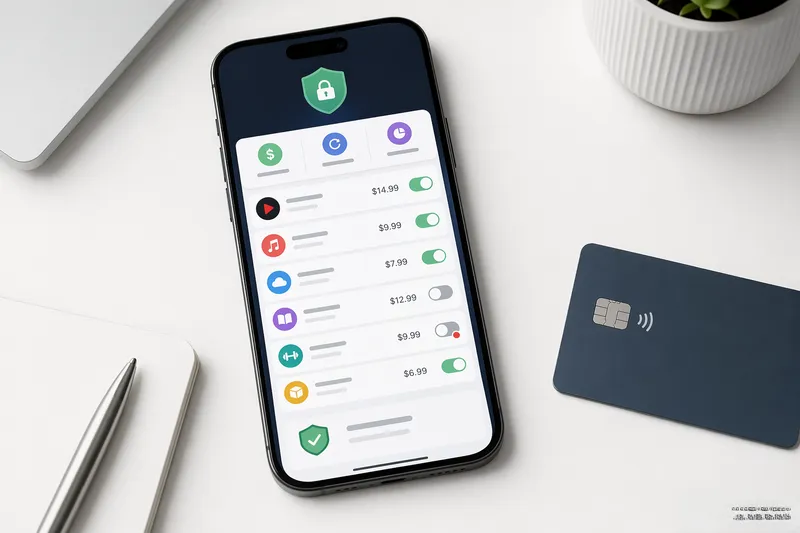
Find zombie subscriptions and generate cancellation letters. Everything runs locally; nothing is uploaded.
FreeToolHub Subscription Auditor is a free browser-based tool — find zombie subscriptions and generate cancellation letters. No signup, no upload; everything runs locally in your browser.
Sobre esta herramienta
Pega tu extracto bancario para encontrar cada cargo recurrente y suscripción zombi. Genera cartas de cancelación al instante. Sin acceso bancario, nada sale de tu navegador.
Zombie detection30+ merchant dictCancel lettersCSV import
¿Qué es el auditor de suscripciones?
Esta herramienta escanea tu extracto bancario o de tarjeta de crédito —texto pegado o exportación CSV— y saca a la luz todos los cargos recurrentes: suscripciones, membresías, primas de seguro y las suscripciones zombis que cancelaste pero que siguieron facturando. Agrupa los cargos por comercio, calcula el coste mensual y anual de cada suscripción, marca duplicados y conversiones de prueba gratuita, y totaliza lo que el gasto recurrente te cuesta al año. Para todo lo que quieras matar, genera una carta de cancelación lista para enviar. Sin login bancario, sin servicio de agregación, sin que ningún dato salga de tu navegador.
¿Quién debería usar esta herramienta?
Cualquiera que alguna vez haya dicho «debería revisar mis suscripciones» y nunca lo hizo. Quienes tienen pruebas gratuitas que en silencio se convirtieron en planes de pago hace meses. Hogares que consolidan sus finanzas tras una mudanza, un cambio de trabajo o un divorcio y necesitan un inventario limpio de obligaciones recurrentes. Quienes construyen presupuestos y quieren cuantificar cuánto cuesta la deriva de suscripciones antes de decidir qué recortar. Y los usuarios conscientes de la privacidad que no entregarán credenciales bancarias a un agregador de terceros como las apps de la era Mint.
¿Cómo funciona?
(1) Exporta tu extracto como CSV desde tu banco, o copia y pega la tabla de movimientos de la banca en línea. (2) El parser extrae fechas, nombres de comercio e importes, y agrupa los comercios repetidos en candidatos a suscripción. (3) Revisa la lista detectada: cada entrada muestra frecuencia, importe, equivalente mensual y total anual, con los patrones sospechosos marcados —aumentos de importe, facturación después de tu fecha de cancelación, servicios duplicados—. (4) Comprueba qué quieres cancelar; la herramienta genera las cartas de cancelación correspondientes con tus marcadores de cuenta rellenados.
¿Cuánto cuestan al año las suscripciones olvidadas?
El patrón es consistente en las encuestas: los hogares tienen más suscripciones de las que pueden nombrar, y el cargo recurrente poco usado o olvidado de media mensual ronda los 10 $ - 25 $. Diez cargos no identificados a 15 $ de media son 1.800 $ al año: un pago de coche. Las categorías caras son las silenciosas: planes de almacenamiento en la nube que ya no necesitas, aplicaciones premium cuyo trial se convirtió, paywalls de noticias y revistas leídos una vez, membresías de gimnasio y clases atadas a contratos, suscripciones de juegos para niños, y servicios duplicados: dos plataformas de música, dos discos en la nube, planes de streaming solapados en un mismo hogar. La matemática de auditoría que hay que hacer: para cada suscripción, el coste mensual por doce contra un sí o no simple a «¿me apuntaría a esto otra vez hoy?». Todo lo que no sea un sí rotundo es candidato a cancelación, y el generador de cartas convierte toda la limpieza en un trabajo de una sentada.
Preguntas frecuentes
¿Es seguro usar el auditor de suscripciones?
Sí. Todo el análisis ocurre al 100 % en tu navegador. No se sube ningún dato, no se requiere login bancario y no se almacena nada: el texto de tu extracto se borra cuando cierras la página.
¿Cómo encuentra las suscripciones?
La herramienta usa un patrón de regex para extraer nombres de comercio e importes de cada línea de tu extracto. Luego agrupa los cargos por nombre de comercio normalizado e importe, y marca cualquiera que aparezca 2 o más veces (lo que indica un cargo recurrente) o que coincida con un diccionario integrado de más de 30 marcas de suscripción conocidas como Netflix, Spotify, Adobe y membresías de gimnasio.
¿Qué son las suscripciones zombis?
Las suscripciones zombis son cargos recurrentes pequeños (menos de 25 $) que aparecen 3 o más meses seguidos. Son fáciles de olvidar —como una suscripción digital de periódico de 4,25 $ o un cargo de 9,99 $ en la tienda de apps— y pueden costarte más de 100 $ al año sin que te des cuenta.
¿Puedo subir un archivo CSV?
Sí. Pulsa el botón «Upload CSV» y selecciona el archivo CSV de tu extracto bancario. La herramienta detecta automáticamente las columnas de comercio e importe y las analiza. El archivo se procesa por completo en tu navegador: no se sube nada.
¿Cómo funcionan las cartas de cancelación?
Para cada suscripción que selecciones, la herramienta genera una carta de cancelación profesional en el tono que elijas: educado y amable, firme y formal, o formal con lenguaje legal que hace referencia a las leyes de protección del consumidor. Puedes copiar todas las letras al portapapeles, descargarlas como archivo de texto o imprimirlas directamente.
Otros nombres de esta herramienta
Esta herramienta también se conoce por estas tareas — cada enlace abre la misma herramienta con una guía enfocada:
Herramientas relacionadas